
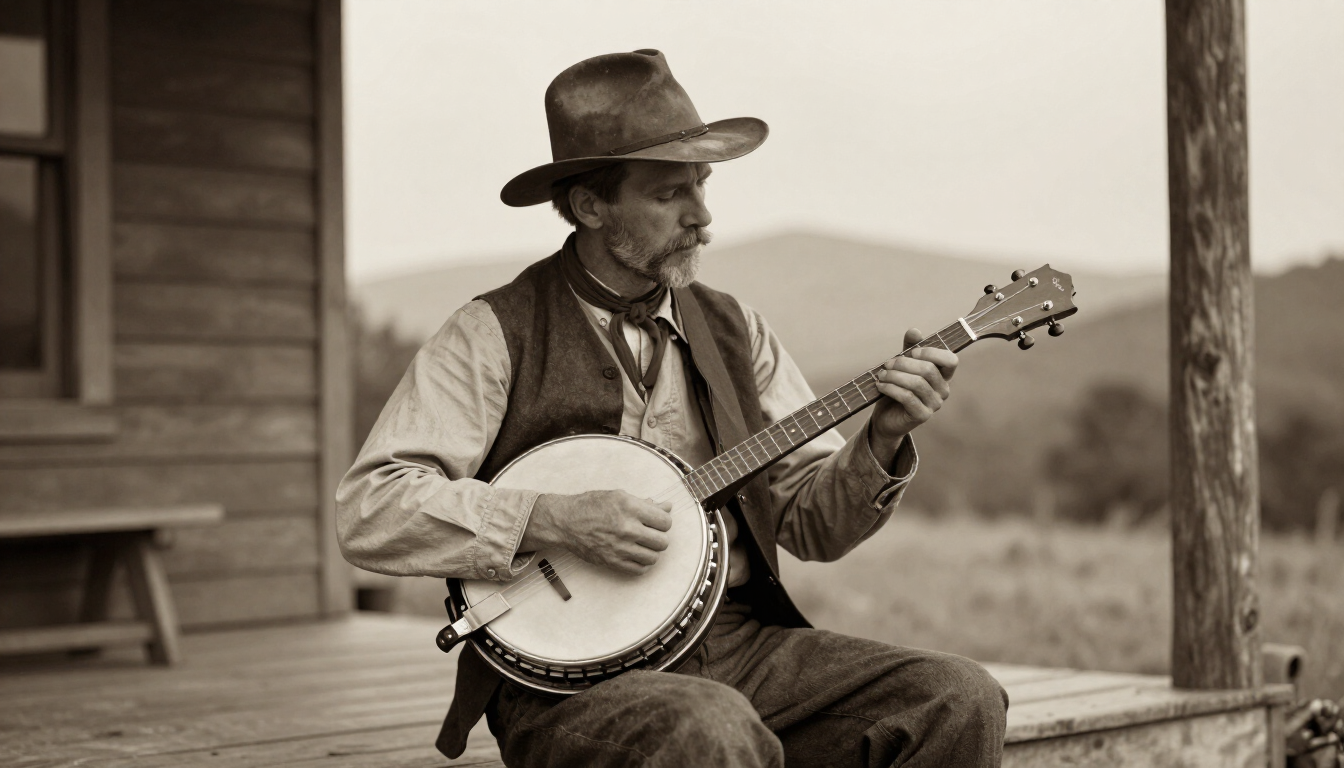
Clarence "Grayson" Ashley: The Clawhammer Banjo Master
From Bristol, Virginia — an old-time banjo player and singer whose recordings of “The Coo Coo Bird” and “The House of the Rising Sun” shaped both early country music and the 1960s folk revival.
Born
Bristol, Virginia (1888)
Instrument
Clawhammer banjo, Guitar
Recordings
1920s–1930s & 1960s revival
Rediscovered
Early 1960s folk revival
Early Life in the Blue Ridge Borderlands
Clarence Tom Ashley was born on September 29, 1888, in Bristol, Virginia, the city on the Virginia–Tennessee border that would later host the historic 1927 Bristol Sessions. He grew up just across the state line in the mountain communities around Shouns, Tennessee, in the same corner of the Blue Ridge that borders Grayson County, Virginia.
This borderland region — where Virginia, Tennessee, and North Carolina meet — was one of the richest old-time music landscapes in America. Ashley absorbed the clawhammer banjo style, the mountain ballads, and the fiddle tunes that had lived in these hollows for generations, learning from family and neighbors in the way the tradition had always been passed down.
He began performing as a young man, traveling with medicine shows and string bands through the mountain towns of Southwest Virginia, East Tennessee, and western North Carolina — the same communities the New River Trail connects today.

The First Recordings, 1929–1933
Ashley’s first commercial recordings came in the late 1920s and early 1930s, during the same explosive first boom of “hillbilly” music that produced the Bristol Sessions, Pop Stoneman, and Kelly Harrell. He recorded for several labels, including Gennett, Victor, and Columbia, often with groups such as the Carolina Tar Heels.
Among the songs he recorded in this period were “The Coo Coo Bird” (1929) and “The House of the Rising Sun” (1933) — two performances that would prove far more durable than their initial sales suggested. His clawhammer banjo style and high, lonesome singing captured a mountain sound that few other recordings of the era preserved so vividly.
A Master of Clawhammer Banjo
Ashley was a master of clawhammer banjo, the older mountain style in which the player strikes the strings with the back of the fingernail in a downward “frailing” motion. This style predates the three-finger Scruggs-style picking that came to dominate bluegrass, and it remains the heartbeat of old-time music today.
Ashley used unusual banjo tunings to match the mood of each song, giving his playing a haunting, modal quality that set his recordings apart. That distinctive sound — stark, rhythmic, and emotionally direct — is what made “The Coo Coo Bird” so memorable and why his recordings were so eagerly sought out by the folk revivalists who rediscovered him decades later.
Signature Songs
From his 1920s and 1930s commercial recordings to his folk-revival albums, these songs define Clarence Ashley’s legacy — old-time ballads, banjo tunes, and songs that reached far beyond the mountains.
Rediscovery During the Folk Revival
Like many early country musicians, Ashley’s recording career was cut short by the Great Depression. He returned to the mountains and worked outside music for decades. Then, in the early 1960s, folklorists Ralph Rinzler and Mike Seeger — the same folklorist who rediscovered Dock Boggs — tracked Ashley down in the mountains of North Carolina and Tennessee.
Ashley emerged into the folk revival, performing at major festivals including the Newport Folk Festival and recording for Folkways Records. Crucially, he brought along a young guitarist from Deep Gap, North Carolina named Doc Watson, who had been playing with Ashley’s group. Watson’s appearances with Ashley helped launch one of the most celebrated careers in American acoustic music.
Through those festival performances and recordings, Ashley’s clawhammer banjo and old-time songs reached a generation of young musicians who would shape folk, bluegrass, and Americana for decades to come.
“The House of the Rising Sun” and a Song That Traveled the World
Ashley’s 1933 recording of “The House of the Rising Sun” (also known as “Rising Sun Blues”) is one of the earliest known recordings of the song. His old-time arrangement, with its modal banjo and lonesome vocal, established a version of the song that traveled through the folk revival and ultimately reached The Animals, whose 1964 rock adaptation became an international hit.
That chain — from a mountain musician in the Blue Ridge borderlands to one of the most famous rock songs of the 1960s — is a measure of how deeply the old-time tradition Ashley carried shaped American popular music. His “Coo Coo Bird” traveled a similar path, becoming a folk-revival standard studied by generations of banjo players.
Influence on American Music
Ashley’s clawhammer banjo and old-time songs reached across generations, shaping the folk revival and the musicians who carried old-time music forward into bluegrass, folk, and Americana.
Connection to Southwest Virginia and the New River Trail
Clarence Ashley was born in Bristol, Virginia, and grew up in the mountain communities bordering Grayson County, Virginia — the same Southwest Virginia region the New River Trail runs through and that The Crooked Road celebrates. The clawhammer banjo tradition he mastered is still played in the communities along the trail and at venues throughout the region.
Visitors exploring the region’s musical heritage can follow The Crooked Road from the New River Trail communities through Bristol, Galax, and the Blue Ridge borderlands where Ashley learned his craft. The old-time banjo sound he carried to the world is still being made there, at weekly jams and annual conventions. Read more on the Old-Time Music in Southwest Virginia page.
A Lasting Legacy
Clarence Ashley died on June 2, 1967, in Winston-Salem, North Carolina, not long after his rediscovery brought his music to a new national audience. But the recordings he left behind — both the 1920s and 1930s commercial sides and the 1960s folk-revival albums — became foundational documents of American old-time music.
His clawhammer banjo style is still studied by musicians who want to understand the older, mountain roots of the instrument, and his songs continue to be performed at festivals and jams throughout the Blue Ridge. The chain of influence he set in motion — from his mountain recordings to Doc Watson, to the folk revival, to the rock and Americana that followed — makes him one of the most important links between the first generation of recorded Appalachian music and the music being made today.
Did You Know?
- Clarence Ashley was born in Bristol, Virginia, in 1888 — the same city that later hosted the 1927 Bristol Sessions.
- He was a master of clawhammer banjo, the older mountain style that predates bluegrass picking.
- His 1929 recording of “The Coo Coo Bird” became a touchstone of the folk revival.
- His 1933 recording of “The House of the Rising Sun” is one of the earliest known recordings of the song and influenced the 1964 hit by The Animals.
- He was rediscovered in the early 1960s by folklorists Ralph Rinzler and Mike Seeger.
- He performed at the Newport Folk Festival and recorded for Folkways Records.
- He brought a young Doc Watson to folk-revival stages, helping launch Watson’s national career.
- He grew up near Grayson County, Virginia, the same region the New River Trail runs through.
Explore More
Old-Time Music in Southwest Virginia
Henry Whitter, G.B. Grayson & more
The Bristol Sessions
The 1927 sessions in Ashley’s birthplace
Doc Watson
The guitarist Ashley brought to the folk revival
Dock Boggs
Rediscovered by the same folklorists
The Crooked Road
Virginia’s Heritage Music Trail
Historic Musicians Hub
All featured musicians of the region
Places to Visit Nearby
The city where Clarence Ashley was born in 1888, and home of the 1927 Bristol Sessions that launched commercial country music.
Learn moreThe mountain county along the New River whose old-time banjo tradition Ashley helped carry to a national audience.
Learn moreVirginia’s Heritage Music Trail connecting the venues and communities where the clawhammer banjo tradition Ashley mastered is still played live.
Learn moreA 57-mile rail trail through the same Blue Ridge mountains whose old-time music Ashley recorded and performed.
Learn moreThe oldest and largest old-time music gathering in the world, held each August in the same region Ashley called home.
Visit websiteA National Park Service site celebrating the music of the Blue Ridge, near Ashley’s Grayson County stomping grounds.
Visit websiteFrequently Asked Questions
Continue Your Appalachian Music Journey
Clarence Ashley is one voice in the Southwest Virginia tradition that carried mountain music to the nation. Learn about his regional neighbors — the Henry Whitter and G.B. Grayson story from Fries, the Bristol Sessions in his birthplace, and the stars who emerged — Jimmie Rodgers and The Carter Family. Follow the story forward through Doc Watson, whom Ashley brought to the folk revival, plus Ralph Stanley, Dock Boggs, Kelly Harrell, Pop Stoneman, and today’s Eddie Bond and Martha Spencer.
And when you visit the region, ride the New River Trail and follow The Crooked Road through Bristol and the Grayson County borderlands where Ashley learned his craft. The clawhammer banjo sound he carried to the world is still being played there.
Plan Your Day Trip to Fries
Fries sits directly beside the New River, where the trail begins downtown and forested ridges rise beyond the water. It is close enough for a day trip from Winston-Salem, Greensboro, High Point and Mount Airy, and rewarding enough to feel like a genuine mountain getaway from Charlotte and the wider North Carolina Piedmont. Combine your activity with time beside the river, a walk through town and a look at the mill and railroad history that shaped the community. Check current trail conditions, weather and park notices before you travel.
Follow the Banjo to Bristol
Ride the New River Trail and follow The Crooked Road through Bristol, the birthplace of Clarence Ashley, and the living clawhammer banjo tradition of Southwest Virginia.