
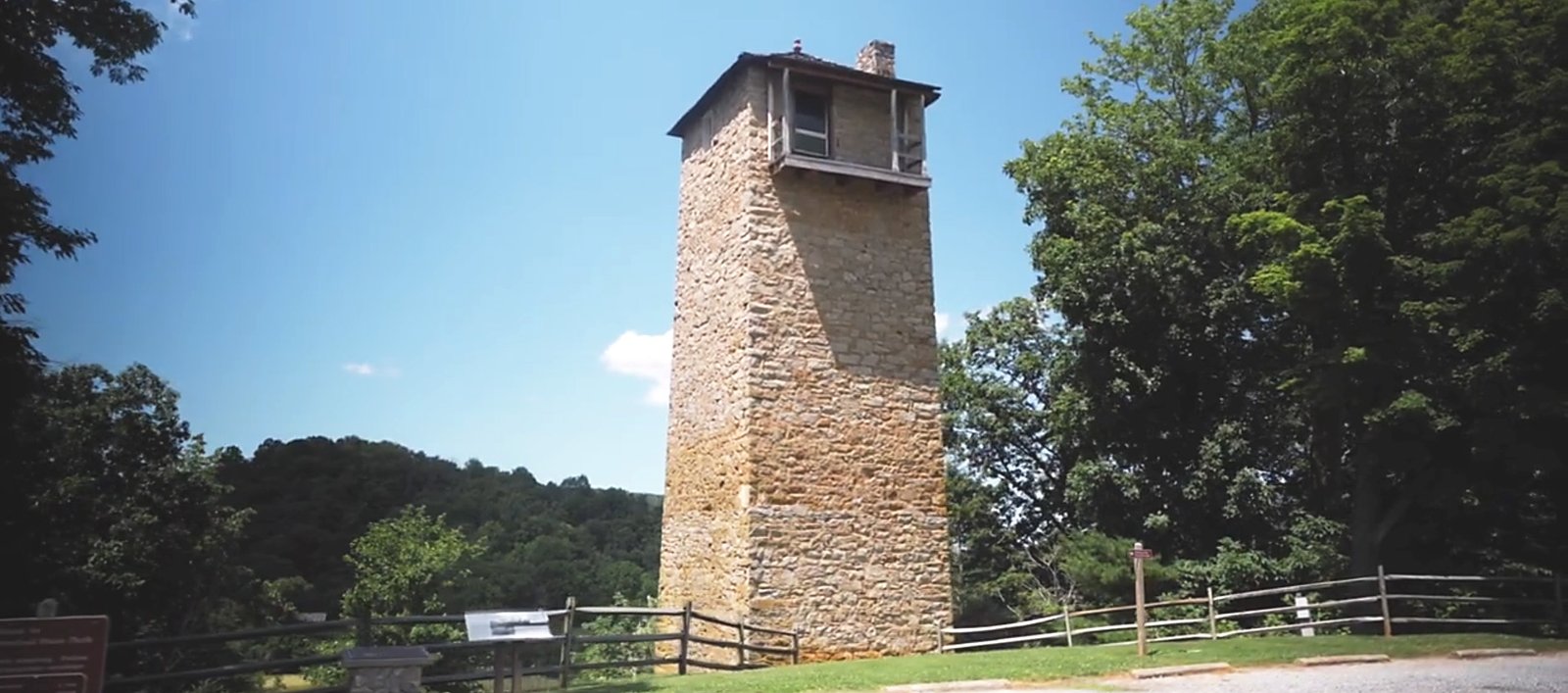
Shot Tower, Virginia
History, New River Trail Access and a Rewarding Side Trip from Foster Falls
Welcome to Shot Tower Historical State Park
Rising above the New River Trail near Austinville, the Virginia Shot Tower is one of the more unusual survivors of the region's early industrial past. Its narrow stone form was built for a single, specific purpose — turning molten lead into small, round shot through nothing more than gravity, a sieve, and a long drop toward a kettle of water.
The site preserves that story alongside pleasant river scenery, making it a natural stop for trail users passing through, or a short, focused destination on its own. The tower sits close enough to the water that its industrial history and the New River's natural setting feel like part of the same landscape.
Renovation work in recent seasons has affected interior tower access. Visitors planning a trip should confirm current tour availability directly with Virginia State Parks before arriving, though the grounds and exterior of the tower generally remain viewable.
Photo Credit: Virginia State Parks
Shot Tower at a Glance
Location
Near Austinville, Virginia, beside the New River Trail
Address
283 Pauley Flatwoods Road, Austinville, Virginia
Park size
Approximately 10 acres
Hours
Dawn to dusk, grounds only
Best for
History-minded travelers, cyclists on a Foster Falls ride, and photographers
Suggested visit
30 minutes to 2 hours
Trail connection
Directly adjacent to the New River Trail, about a mile south of Foster Falls
Current caution
Tower tours have been unavailable during recent renovation work; confirm current status before visiting
Why Visit the Shot Tower?
The Shot Tower ties directly into the broader regional story explored on the History page — a landscape shaped by mineral resources, river access, and the industries that grew up around both. Few sites along the New River Trail illustrate a single manufacturing process as clearly as this one.
Because the tower sits so close to Foster Falls, it's easy to fold into a day already built around trail riding, camping, or river recreation. A stop here rarely requires rearranging an itinerary — it simply extends one.
What Is a Shot Tower?
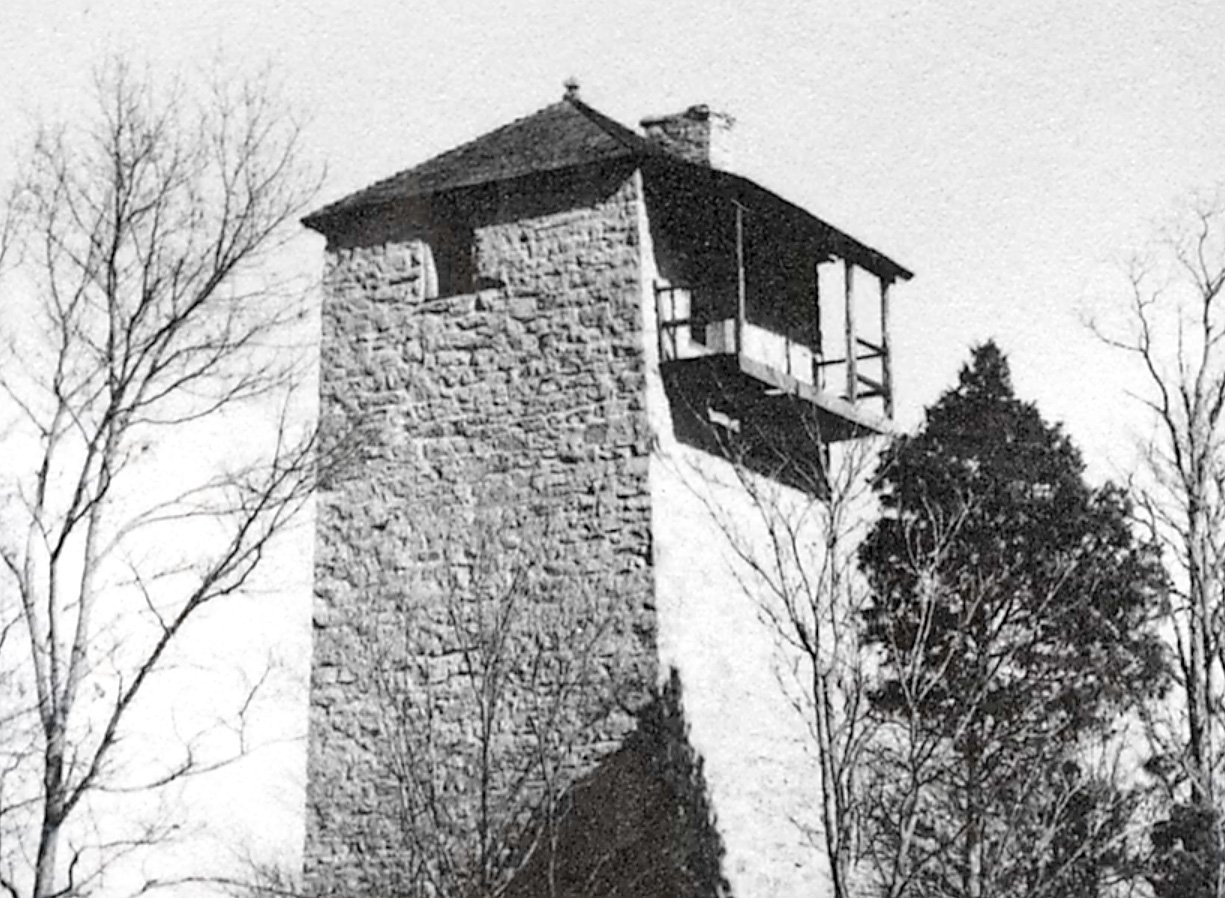
A shot tower is an industrial structure built to manufacture small lead balls, or shot, using gravity rather than machinery. Molten lead poured through a sieve near the top separated into droplets that cooled into spheres as they fell.
At the Virginia Shot Tower, that drop covers roughly 150 feet in total: about 75 feet of tower rising above ground, plus a shaft dug roughly 75 feet down into the ground below it. The extended distance gave the falling lead enough time to cool and harden into a round shape before landing.
Who Built the Virginia Shot Tower?
The tower is generally credited to Thomas Jackson and the Jackson family, and is believed to date to the early 1800s. Precise construction records are limited, so most reliable sources describe an approximate era rather than a single confirmed year — a reasonable degree of uncertainty for a structure this old.
Why Was the Tower Built Here?
The site was chosen deliberately. Lead deposits in the surrounding hills near Austinville supplied the raw material, while the steep riverbank along the New River provided a natural drop that made digging the underground shaft more practical than it would have been on flatter ground.
The New River corridor itself added a further advantage: a transportation route for moving finished shot to buyers across a wide region, well before the railroad later followed a similar path along the river.
How Lead Shot Was Made
A simple, gravity-driven process refined over decades of use.
Heating the lead
Lead was melted in a furnace near the top of the tower until it reached a liquid state suitable for pouring.
Pouring through a sieve
Workers poured the molten lead through a perforated sieve, breaking it into small, roughly uniform droplets.
Falling and cooling
Each droplet fell nearly 150 feet total — about 75 feet above ground plus roughly 75 feet down a shaft dug below ground — cooling and hardening into a round sphere as it fell.
Landing in water
A kettle of water at the bottom of the shaft caught the falling shot, preventing damage and completing the hardening process.
Sorting
The finished shot was sorted by size and inspected, with imperfect or misshapen pieces set aside.
Remelting
Rejected or oversized shot could be remelted and poured again, making the process fairly efficient for its time.
The Tower's Architectural Character
The tower is built from local stone, stacked into a tall, narrow, tapering form. Nothing about the design is decorative — every element, from the wall thickness to the interior shaft, serves the shot-making process it was built to house.
That practical, purpose-built character is part of what makes the structure significant today. Shot towers were once common wherever lead ammunition was manufactured, but relatively few survive intact in the United States, making this one a notable regional landmark.
Visiting Today
The grounds and exterior of the Shot Tower remain open to visitors, offering close views of the structure, interpretive signage, and access to the surrounding parkland along the New River Trail.
Interior access has been limited during recent renovation work, and guided tower tours have not always been available. Anyone hoping to see the shaft or climb the tower should check the Virginia State Parks website for current status before planning a visit around that experience.
Before you go: confirm current tower tour availability, parking, and hours on the Virginia State Park website, since renovation schedules can change access without much notice.
Video credit: Virginia State Parks
Shot Tower and the New River Trail
The park sits directly beside the New River Trail, and the connection between the two runs deeper than proximity. The first completed section of the trail opened on May 2, 1987, running from Shot Tower to Austinville — meaning this stretch of corridor was where the New River Trail as we know it today actually began.
That history gives the site a dual role: a landmark from the region's lead-mining era, and the literal starting point of one of Virginia's most-used rail trails.
The Shot Tower sits just over a mile south of Foster Falls on the New River Trail, making it one of the easiest side trips available to anyone already staying or riding in that area.
The short distance, gentle grade, and clear destination make this ride suitable for families and beginning cyclists who want a real objective without a long commitment. Allow 1 to 2 hours for a relaxed round trip that includes time exploring the tower grounds.
A Short Shot Tower Itinerary
However much time you have, there's a way to make the stop worthwhile.
Park, walk around the exterior of the tower, read the interpretive signage, and take a few photographs before continuing on your way.
Add a short walk along the adjacent New River Trail in one direction, then return to explore the grounds at a relaxed pace.
Combine the tower with a longer stretch of trail walking or a bike ride to and from Foster Falls, allowing time to rest by the river along the way.
Best Things to Do at the Shot Tower
The best angles capture the tower's tapering form against the sky or framed by surrounding trees. Early morning and late afternoon light bring out the texture of the stone. Anyone considering drone photography should check current park rules first, since drone use is often restricted in state parks.
A stop at the tower works well as a short visual visit, even for young children, who can usually grasp the basic idea of gravity pulling falling lead into a round shape. Extend the visit with a picnic, a walk along the trail, or a short bike ride, and keep an eye on children near the riverbank and any uneven ground.
The grounds are compact, but outdoor surfaces and slopes near the tower and riverbank may present challenges for some visitors. Contacting the park directly before a visit is the best way to get current, detailed accessibility information.
Nearby Attractions
Foster Falls
The historic heart of New River Trail State Park, just over a mile north, with camping, rentals, and lodging.
Austinville
A small community near the tower with deep ties to the region's historic lead and iron mining industry.
Draper
A quiet trailside community along the New River Trail corridor.
Claytor Lake State Park
A nearby lake park offering swimming, boating, and additional camping options.
Pulaski
A nearby town with restaurants, shops, and services close to the trail.
Morning — Start at Foster Falls, exploring the historic village and picking up a rental bike if needed.
Late morning — Ride or walk south on the New River Trail to the Shot Tower, just over a mile away.
Midday — Explore the tower grounds, read the interpretive displays, and take photos before a riverside picnic.
Afternoon — Return to Foster Falls along the same route, with time left for paddling, fishing, or simply relaxing by the river.
Frequently Asked Questions
Continue Planning Your Trip
Keep going with these related New River Trail guides.
Trail Guide & Map
See the complete New River Trail map and trailhead guide for the full 57-mile route.
Read moreFoster Falls
Visitor center, bike and boat rentals, and camping a short ride down the trail.
Read moreFishing Guide
Fish species, access points, and seasonal tips for the New River near the tower.
Read moreBiking Guide
Route segments and bike rentals for riding the trail to the Shot Tower.
Read morePlan Your Visit
Itineraries, parking, and a packing checklist for your trip.
Read moreHistory
The railroad, the Washington Mill, and how the trail came to be.
Read morePlan a Trip to Shot Tower
Pair a visit with Foster Falls, or check the trail guide for maps and mileage along the rest of the New River Trail.