
Bluegrass Music
The high, lonesome sound born from old-time string bands — and the Southwest Virginia voices who defined it.
From String Bands to Bluegrass
Bluegrass emerged in the 1940s when Bill Monroe and his Blue Grass Boys fused the old-time string-band music of his Kentucky childhood with blues phrasing, gospel harmonies, and a new level of instrumental virtuosity. The sound — driving banjo, high tenor harmonies, and lightning-fast solos — quickly spread through the same mountain communities that had nurtured old-time music.
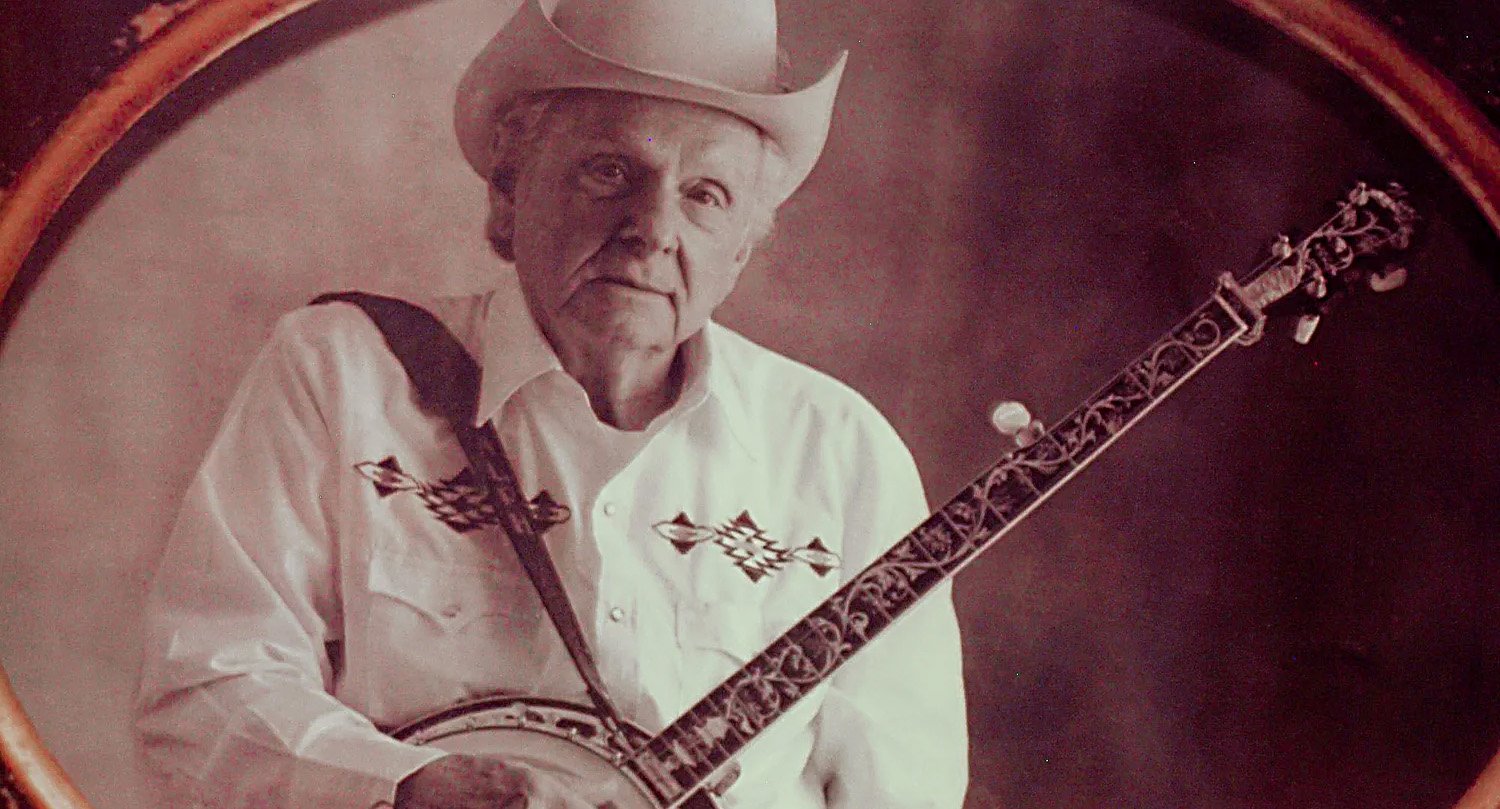
Southwest Virginia became one of bluegrass’s most important homes. The Stanley Brothers — Ralph and Carter Stanley — formed their band in 1946 and developed a mountain-rooted bluegrass that rivaled Monroe’s in influence. After Carter’s death in 1966, Ralph carried the tradition forward with the Clinch Mountain Boys for another 50 years. Read the full story in our Ralph Stanley guide.
What Sets Bluegrass Apart
Instrumental Solos
Unlike old-time music, bluegrass features individual solos taken in turn — a direct influence of jazz and blues.
High Lonesome Harmony
The signature two- and three-part vocal harmonies, often in a high, mournful register, define the bluegrass vocal sound.
Three-Finger Banjo
Earl Scruggs’ three-finger banjo roll gave bluegrass its driving momentum — distinct from old-time clawhammer.
Hear It Today
Bluegrass is heard weekly along The Crooked Road — at the Rex Theater in Galax, the Floyd Country Store, and the Galax Old Fiddlers’ Convention each August. The Ralph Stanley Museum in Clintwood tells the story of the region’s bluegrass patriarch.
Did You Know?
- Bluegrass is named after Bill Monroe’s band, the Blue Grass Boys — a nod to Monroe’s home state of Kentucky.
- Ralph Stanley’s a cappella “O Death” on the O Brother, Where Art Thou? soundtrack won a Grammy and introduced bluegrass to millions.
- Many of bluegrass’s most influential players first performed with the Stanley Brothers’ Clinch Mountain Boys.
Combine Music and the Outdoors
Plan a trip that pairs a day on the New River Trail with the living musical heritage of Southwest Virginia.